
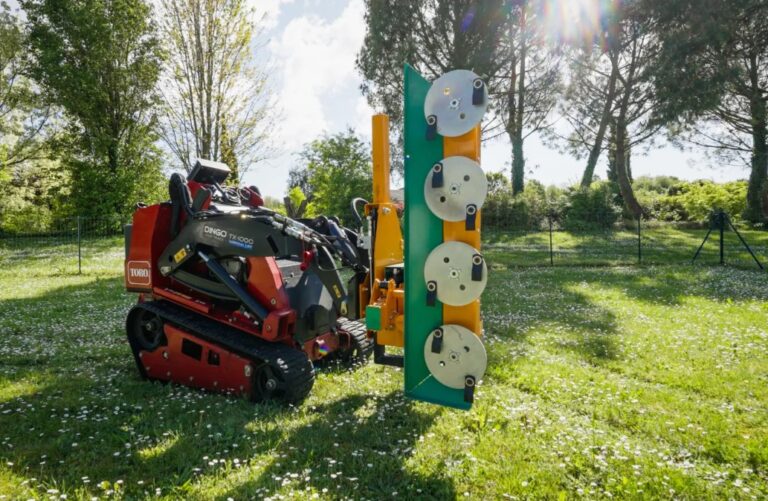
No two hedges ask for the same treatment. A formal ornamental screen, a thick agricultural boundary, a neglected line of overgrown shrubs and a roadside hedge each present their own constraints, and the same hedge cutting machine used the same way on all of them will disappoint somewhere.
The professionals who get the best results think in scenarios: they identify the type of hedge in front of them, then adapt the machine, the cutting head and the method. This guide walks through the main situations you are likely to meet and how a hedge cutting machine should be used in each one.
First, Read the Hedge
Before any blade turns, three observations determine the whole approach:
- Age and wood diameter. Young, flexible growth and old, hardened stems do not respond to the same cutting technology.
- Function. Is the hedge there to look good, to shelter crops and livestock from wind, to mark a boundary, or to protect biodiversity? The function dictates how much you remove and what shape you aim for.
- Maintenance history. A hedge trimmed every year only needs a light pass. One ignored for a decade requires a genuine restoration plan, sometimes spread over several seasons.
With this diagnosis in hand, the choice of machine and method becomes straightforward.
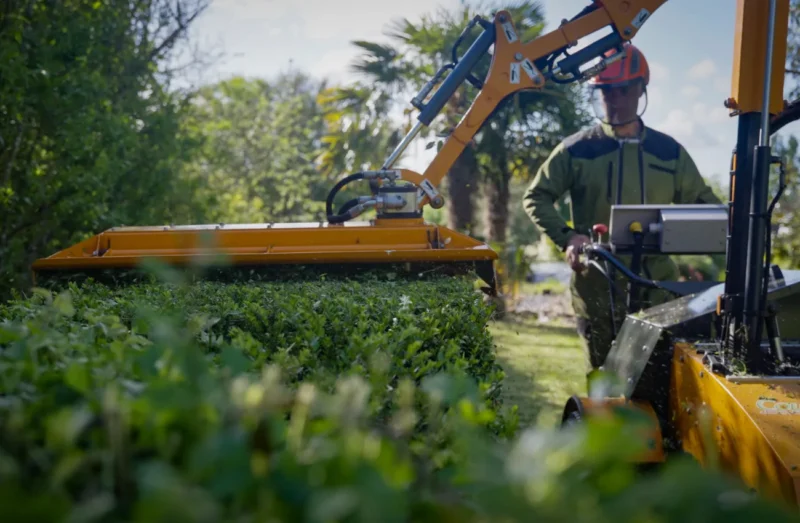
Scenario 1: The Ornamental Hedge
In parks, around public buildings or along residential streets, appearance is the priority. The hedge cutting machine should be fitted with a finishing head, typically a reciprocating cutter bar or a light multi-blade unit, that leaves a perfectly straight, smooth surface on fine branches.
Work slowly, keep the head at a constant distance from the foliage and always cut the sides before levelling the top. Frequency matters more than intensity here: two or three light passes a year keep the hedge dense and crisp, whereas one heavy annual cut leaves visible holes that take months to close.
Scenario 2: The Agricultural Hedgerow
Field boundary hedges are working structures. They block wind, hold soil, shelter beneficial insects and livestock. They are also made of tougher material: hawthorn, blackthorn, hazel and field maple quickly produce wood that defeats light trimming heads.
This is the natural territory of the circular saw blade head. Mounted on a tractor arm, it slices cleanly through stems of significant diameter, leaving smooth cuts that heal fast and stimulate dense regrowth from the base. The recommended rhythm is a maintenance pass every two or three years rather than annually: slightly less frequent cutting lets the hedge flower and fruit, which benefits wildlife, while the saw blades comfortably handle the extra growth when the machine returns.
Shape matters too. Aim for a trapezoid wider at the bottom than at the top: light reaches the lower branches, the hedge stays thick from the ground up and resists wind far better.
Scenario 3: Restoring a Neglected Hedge
Every contractor knows the call: a hedge untouched for ten or fifteen years, now a ragged line of small trees swallowing a fence or leaning over a lane. Restoration is where a powerful hedge cutting machine proves its worth, but brute force alone is not a strategy.
The proven approach is staged. In the first winter, reduce the height substantially and cut back one side, leaving the other to maintain some cover and food for wildlife. The following dormant season, treat the second side. Heavy cuts on old wood should always be made with saw blades, never flails: torn stumps of large diameter rot instead of healing, and the hedge may never recover its density.
Plan the evacuation of the considerable volume of wood this work generates, and warn the client that the hedge will look severe for a year before regrowth transforms it.
Scenario 4: Roadside and Linear Networks
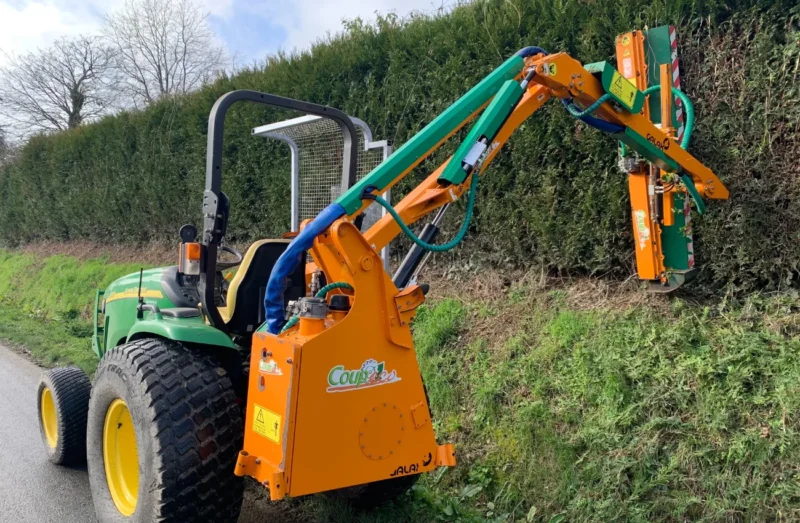
Roads, railways and waterways are bordered by hundreds of kilometres of hedges whose maintenance is first a question of safety: visibility at junctions, clearance for vehicles, prevention of falling branches. Here the hedge cutting machine must combine reach, robustness and a clean finish, because the public sees the result every day.
Machines used on these networks work in demanding conditions: long days, varied vegetation, slopes and ditches. Reliability and quick blade replacement become decisive criteria, as does the ability to work without disrupting traffic. Many operators schedule these linear programmes in late winter, closing the cutting season on the most visible hedges so they stay neat the longest.
Building a Multi-Year Programme
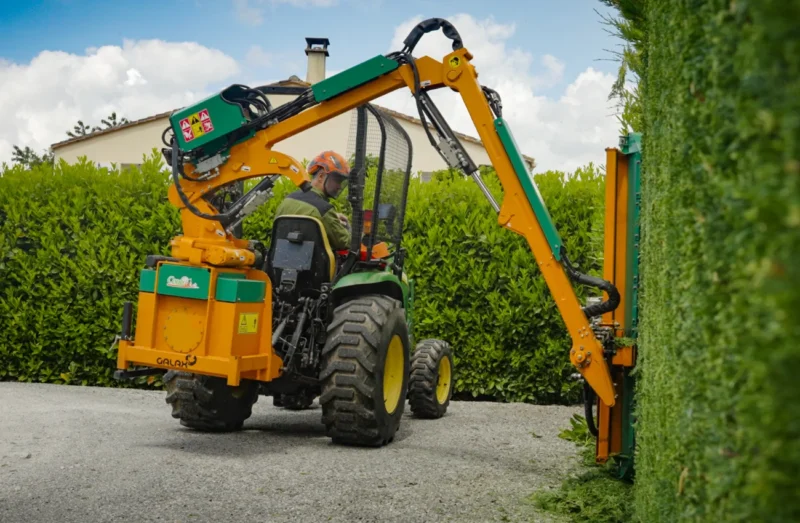
The final step separates occasional users from true professionals: planning. Map the hedges under your responsibility, classify them by scenario, and assign each a frequency and a season. The ornamental hedges get their summer-edge finishing passes within the permitted dates, the agricultural network rotates on a three-year cycle, and restorations are booked for the deepest winter months.
A programme like this spreads the workload, keeps the machine earning all season, and guarantees that no hedge silently drifts into the costly neglected category.
Conclusion
A hedge cutting machine is not a single-purpose tool but a platform that adapts to every hedge it meets, provided the operator reads the situation first. Match the cutting head to the wood, the method to the function and the calendar to the biology, and the same machine will deliver immaculate ornamental lines, vigorous agricultural hedgerows and safe, tidy roadsides for many years.